
Kosovo Camp is not an officially recognized campsite on any of the standard Kilimanjaro climbing routes. The term is sometimes used informally by guides or porters, potentially referring to a specific resting spot or a temporary staging area, often in the vicinity of Mweka Camp on the Mweka or Marangu routes, or sometimes even in the lower forest zone. Its usage is not standardized, making it important for trekkers to clarify with their tour operator if they encounter this term during planning or on the mountain.
Understanding the Term ‘Kosovo Camp’ on Kilimanjaro
The mention of ‘Kosovo Camp’ on Kilimanjaro can be a point of confusion for aspiring climbers. Unlike established camps such as Barafu, Kibo, Mweka, or Horombo, ‘Kosovo Camp’ does not appear on official route maps or park regulations. This leads to questions about its existence, location, and relevance to the climbing experience. Top Guide Adventures, as a leading tour operator in Tanzania, aims to demystify such terms and provide clear, accurate information to ensure your Kilimanjaro climb in 2026 or 2027 is well-prepared.
Is Kosovo Camp a Real Kilimanjaro Campsite?
To be absolutely clear: Kosovo Camp is not a designated, official campsite on Kilimanjaro National Park’s approved climbing routes. The park authorities and the Tanzania National Parks Authority (TANAPA) maintain strict regulations regarding where trekkers can camp. These regulations are in place for safety, environmental protection, and to manage the flow of climbers on the mountain. Official campsites are strategically located along each route, offering designated tent pitches, basic facilities (like pit latrines), and park ranger presence.
If ‘Kosovo Camp’ is mentioned, it’s likely an informal reference. This could mean:
- A specific resting point: Guides might refer to a particular clearing or spot where the group typically stops for lunch or a rest break, especially on longer ascents or descents.
- A temporary staging area: In some cases, especially with large groups or specific logistical needs, a temporary area might be used for organizing gear or personnel.
- Local or porter slang: It could be a term used within the local guiding community, perhaps referencing a historical event, a geographical feature, or simply a convenient landmark.
- Confusion with other camps: It’s possible the term is a misremembered or misspoken version of a real camp name, such as Kibo Camp or Barafu Camp.
Why the Confusion? Exploring Potential Origins and Meanings
The ambiguity surrounding ‘Kosovo Camp’ stems from its unofficial nature. While official camps have clear purposes and locations, informal names can emerge organically. Some theories suggest the name might have originated from:
- A resemblance to a location: Perhaps a specific area reminded someone of a landscape in Kosovo, Albania. This is speculative and not officially documented.
- A historical event: It’s possible a particular incident or a group of climbers from Kosovo used a specific spot, leading to its informal naming.
- A misunderstanding or corruption of another name: The name could have evolved over time from a different, perhaps indigenous, term.
Regardless of its origin, the key takeaway for trekkers planning their climb for 2026 or 2027 is that Kosovo Camp should not be expected as a standard overnight stop. Your itinerary will be based on official park-approved campsites.
Kilimanjaro’s Official Campsites: What You Need to Know
To properly understand why ‘Kosovo Camp’ isn’t on the map, it’s essential to look at the official camping structure on Kilimanjaro. The mountain has several designated routes, and each route has its own set of approved campsites. These are crucial for the safety and logistics of climbing Africa’s highest peak.
Common Kilimanjaro Routes and Their Official Camps
Different routes have different camping strategies. Here’s a brief overview of some popular routes and their typical overnight stops:
- Marangu Route (Coca-Cola Route): This is the only route that offers dormitory-style accommodation in huts rather than camping. However, it does have designated ‘hostels’ at Mandara and Kibo, and sometimes campers might use areas near these points if not using the huts.
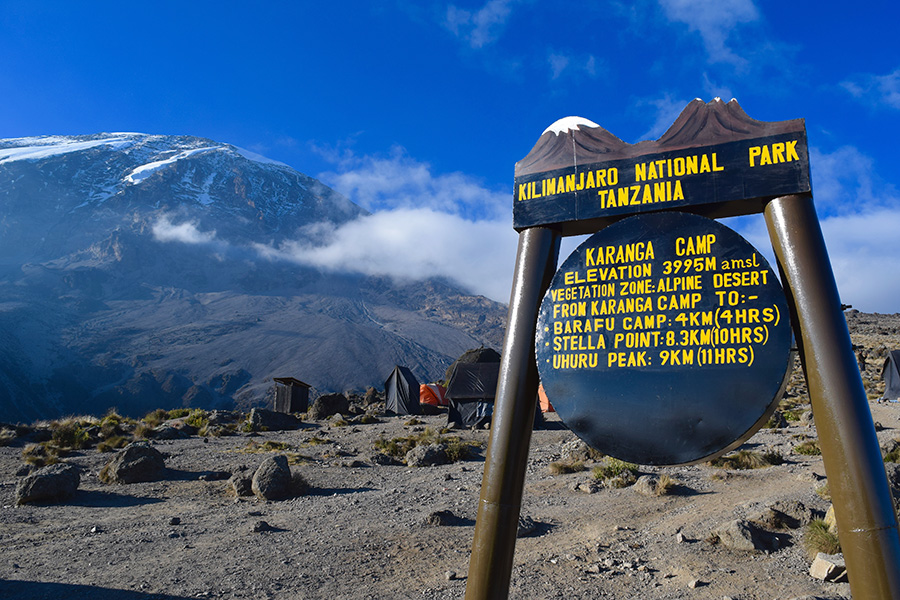
- Machame Route (Whiskey Route): A very popular route known for its scenic beauty and high success rates. Camps include Machame Camp, Shira Camp, Barranco Camp, Karanga Camp, and Barafu Camp.
- Lemosho Route: Similar to Machame in its popularity and scenic value, it often shares campsites with Machame after the initial days. Camps can include Mti Mkubwa, Shira 1, Shira 2, Barranco, Karanga, and Barafu.
- Shira Route: Starts at a higher altitude than Lemosho and merges with it. Camps are similar to Lemosho.
- Rongai Route: Approaches from the north, offering a different landscape. Camps include Simba Camp, Kikelewa Caves, Mawenzi Tarn, and Kibo (or School Hut).
- Northern Circuit: The longest route, offering the best acclimatization and highest success rates. It circles the mountain and shares some campsites with the Lemosho route, including Mti Mkubwa, Shira 1, Shira 2, Barranco, Karanga, and Barafu, before heading to the Western Breach.
- Mweka Route: Primarily used as a descent route, but can be used for ascents, often in combination with other routes. The main camp is Mweka Camp.
Notice that ‘Kosovo Camp’ is absent from these official lists. If your operator mentions it, it’s vital to seek clarification.
The Role of TANAPA and Park Regulations
The Tanzania National Parks Authority (TANAPA) oversees Kilimanjaro National Park. They designate specific campsites to ensure:
- Environmental Protection: Concentrating waste and human impact in specific areas helps protect the fragile alpine ecosystem.
- Safety: Campsites are often located in areas with ranger presence and are chosen for their relative safety from rockfall or extreme weather.
- Logistics: Having fixed points for overnight stays simplifies the management of porters, guides, and supplies.
- Fairness: Ensures all licensed operators follow the same rules and utilize designated facilities.
Any deviation from these official sites is generally not permitted for overnight stays. This reinforces why ‘Kosovo Camp’ cannot be considered a standard part of a Kilimanjaro itinerary.
Where Might ‘Kosovo Camp’ Be Located? Exploring Scenarios
Given that ‘Kosovo Camp’ isn’t official, where might someone have heard about it, or what could it realistically refer to?
Scenario 1: Near Mweka Camp (Mweka Route or Marangu Route Descent)
The Mweka Route is a popular descent route, particularly for the Machame, Lemosho, and Shira routes. Mweka Camp is the final campsite before reaching the Mweka Gate. It’s located in the montane forest zone.
It’s conceivable that ‘Kosovo Camp’ could refer to a specific clearing or area near Mweka Camp. Perhaps it’s a spot where porters might gather, or where guides might briefly stop before the final descent. If someone climbed via a route that descends via Mweka, and their guide used the term, this is a likely origin.
Similarly, while the Marangu Route uses huts, the descent often uses the Mweka path. If a group chose to camp near Mweka Camp instead of descending all the way to the gate on the final day, an informal name for a staging area might arise.
Scenario 2: A Forest Zone Staging Area
On routes like Lemosho or Shira, the initial days are spent in the montane forest. It’s possible that ‘Kosovo Camp’ could refer to an informal staging area used during the early ascent or late descent through this zone. These areas might be used for:
- Organizing the trekking party.
- Brief rest stops during steep ascents.
- Temporary gathering points before reaching the next official camp.
Scenario 3: A Misunderstanding of ‘Kibo Camp’ or ‘School Hut’
On the Rongai Route, ‘School Hut’ is the final camp before the summit push. On other routes like Machame or Lemosho, ‘Kibo Hut’ is an accommodation option at the base of the Kibo massif, though most climbers use Barafu Camp. It’s possible that ‘Kosovo Camp’ is a phonetic misunderstanding or a corruption of ‘Kibo Camp’ or ‘School Hut’.
Scenario 4: A Specific Porter/Guide Reference
Sometimes, informal names arise from specific experiences or local knowledge. A particular guide might have a personal name for a spot they frequent, and this name might be passed down within their circles. This is highly localized and not something a standard tour operator would build an itinerary around.
Planning Your Kilimanjaro Climb: What You Should Rely On
When planning your Kilimanjaro climb for 2026 or 2027 with Top Guide Adventures, it’s crucial to rely on official information and clear communication with your operator. Here’s what you should focus on:
Choosing the Right Route
Your choice of route is paramount. Each route has different:
- Duration: Ranging from 5 days (e.g., Marangu) to 9+ days (e.g., Northern Circuit). Longer routes generally offer better acclimatization and higher success rates.
- Scenery: Different routes traverse distinct landscapes, from dense forests to alpine deserts and glacial zones.
- Difficulty: Some routes are steeper or involve more challenging terrain than others.
- Crowds: Popular routes like Machame can be busier, especially during peak seasons.
Top Guide Adventures can help you select the best route based on your fitness, time availability, and desired experience. We can discuss the official campsites for each route in detail.
Understanding Itineraries and Daily Schedules
Official itineraries will clearly list the start point, daily trekking distances, estimated times, and the official campsite or hut for each overnight stay. For example, a Machame Route itinerary might look like:
- Day 1: Machame Gate to Machame Camp
- Day 2: Machame Camp to Shira Camp
- Day 3: Shira Camp to Barranco Camp
- Day 4: Barranco Camp to Karanga Camp
- Day 5: Karanga Camp to Barafu Camp
- Day 6: Barafu Camp to Summit, then descend to Mweka Camp
- Day 7: Mweka Camp to Mweka Gate
This structure is based on TANAPA’s approved campsites. If ‘Kosovo Camp’ were a factor, it would need to be officially recognized and integrated into these plans.
Booking with Reputable Operators
Choosing a reputable tour operator like Top Guide Adventures is essential. We prioritize safety, quality service, and adherence to park regulations. We ensure our guides are well-trained, knowledgeable about the mountain, and communicate clearly with clients.
- Transparency: We provide detailed itineraries, clear inclusions/exclusions, and honest advice.
- Experienced Guides: Our guides are certified and experienced, familiar with all routes and official campsites.
- Safety First: We adhere to strict safety protocols, including carrying oxygen, first-aid kits, and ensuring proper acclimatization.
When discussing your climb, feel free to ask about any specific terms or locations you’ve encountered. We are here to provide clarity. You can reach us via WhatsApp +255616946642 or email at topguideadventures@gmail.com.
When to Climb Kilimanjaro: Timing for 2026 and 2027
The best time to climb Kilimanjaro is during the dry seasons, which offer clearer skies and less challenging trail conditions. These typically fall between:
- January to March: Generally good, with a brief wetter period sometimes in late March.
- June to October: The prime season, offering the most stable weather.
The rainy seasons are April-May and November-December. While climbing is possible, expect more challenging conditions.
Peak Seasons for 2026 and 2027
For trekkers aiming for 2026 or 2027, the peak seasons will likely remain the same:
- 2026: June, July, August, September, and early October offer the best weather. January and February are also good months.
- 2027: Similar patterns are expected. June through October will be the most sought-after months, followed by January and February.
Booking in advance is highly recommended, especially for peak seasons. Many climbers book 6-12 months ahead to secure their preferred dates and operators. This allows ample time for preparation and ensures availability, especially for group departures or specific dates in 2026 and 2027.
Considering Shoulder Seasons
Shoulder seasons (like late March/early April or November) can offer fewer crowds and potentially slightly lower prices, but come with a higher chance of rain. If you’re flexible and prepared for varied weather, these can be viable options.
What to Expect on Kilimanjaro: Beyond the Camp Names
While the name ‘Kosovo Camp’ might be a minor point of confusion, the overall experience on Kilimanjaro is profoundly rewarding. Here’s what you can expect:
The Kilimanjaro Trekking Experience
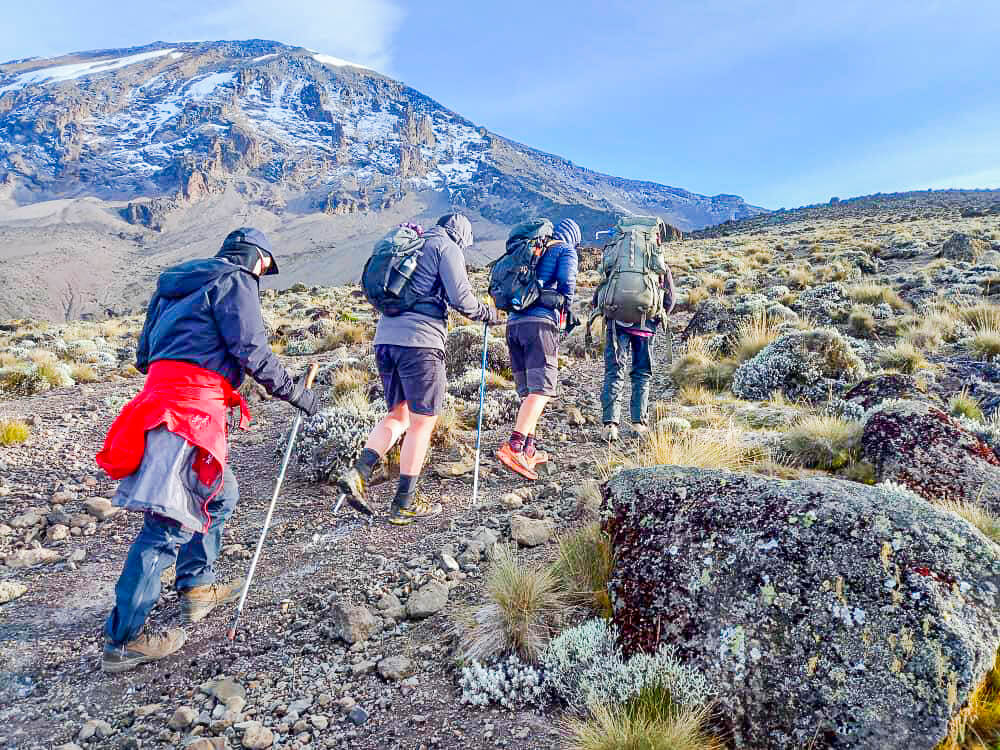
Climbing Kilimanjaro is a multi-day trek through distinct ecological zones:
- Cultivation Zone (approx. 800-1800m): Lush farmland and forest.
- Rainforest Zone (approx. 1800-2800m): Dense, humid forest with abundant wildlife potential (monkeys, birds).
- Moorland Zone (approx. 2800-4000m): Heather, grasses, and giant groundsels. Weather becomes cooler and drier.
- Alpine Desert Zone (approx. 4000-4800m): Sparse vegetation, rocky terrain, and significant temperature drops. Days are sunny, nights are freezing.
- Arctic Zone (approx. 4800m+): Bare rock, ice, and snow. Very little life, extreme cold, and low oxygen levels.
The trek involves significant daily ascents and descents, often walking for 4-8 hours per day, with summit night being considerably longer (10-16 hours).
Acclimatization is Key
Proper acclimatization is the single most important factor for a successful and safe summit attempt. This is why longer routes (7+ days) are highly recommended. The principle of ‘pole pole’ (slowly, slowly) is vital. Your body needs time to adjust to the decreasing oxygen levels as you gain altitude.
- Listen to your body: Report any symptoms of altitude sickness (headache, nausea, dizziness) to your guide immediately.
- Stay hydrated: Drink plenty of water (3-4 liters per day).
- Eat well: High-carbohydrate meals are provided to give you energy.
- Ascend slowly: Avoid rapid ascents. “Climb high, sleep low” is a beneficial strategy employed on some routes.
Summit Night: The Ultimate Challenge
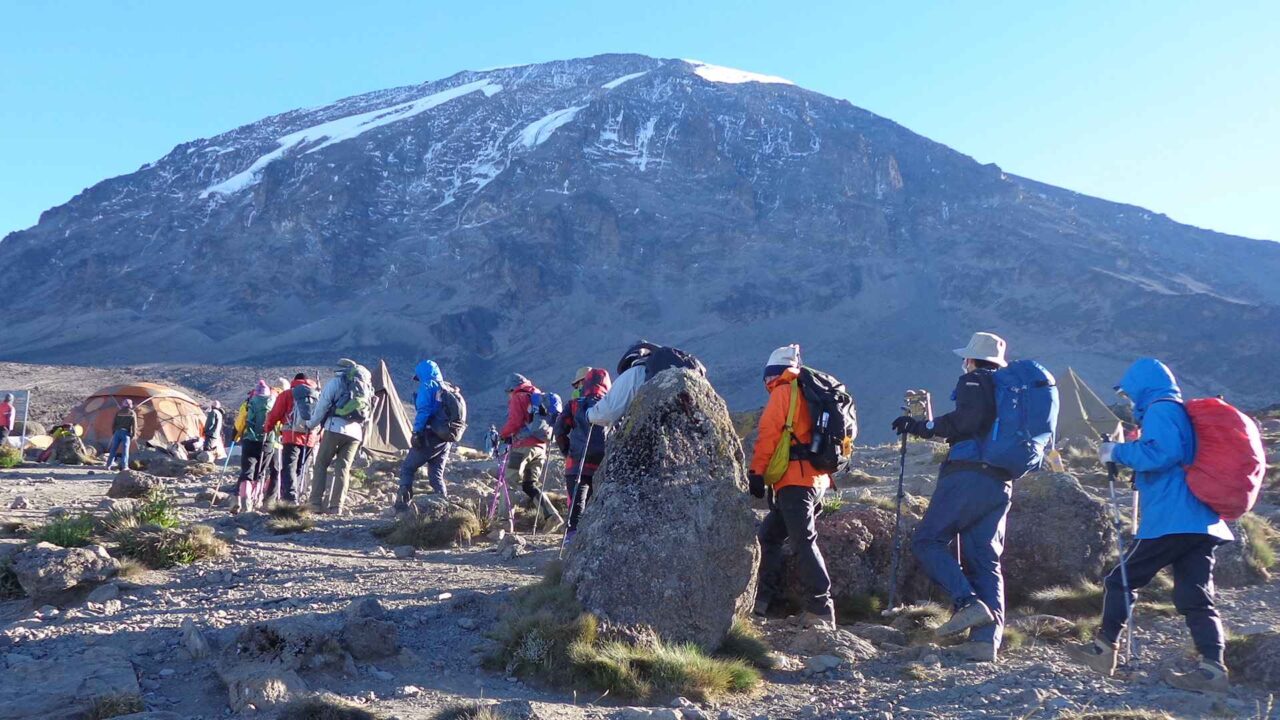
Summit night typically begins around midnight from the final camp (e.g., Barafu Camp or Kibo Hut). It involves a steep, sustained climb in the dark, often in freezing temperatures and strong winds, to reach Uhuru Peak (5,895m) by sunrise. This is the most physically and mentally demanding part of the trek.
- Gear is crucial: Warm layers, good gloves and hat, headlamp, and sturdy boots are essential.
- Pacing: Maintain a slow, steady pace.
- Mental fortitude: Focus on one step at a time.
After reaching the summit, you’ll immediately begin your descent to a lower camp (often Barafu or Mweka) to aid recovery and reduce the risk of altitude sickness.
Safety and Support on Kilimanjaro with Top Guide Adventures
Safety is our utmost priority. When you climb with Top Guide Adventures, you benefit from:
- Experienced and Certified Guides: Our guides are trained in wilderness first aid and mountain rescue.
- Emergency Oxygen: We carry supplementary oxygen for emergencies.
- Regular Health Checks: Guides monitor climbers’ health daily.
- Park Rangers: Official campsites have ranger presence for added security.
- Communication: While mobile signal is limited, guides can use radios or satellite phones for emergencies.
We understand that climbing Kilimanjaro is a significant undertaking. Our team is dedicated to providing the support you need, from initial planning for your 2026 or 2027 climb to your safe return to Moshi or Arusha.
Frequently Asked Questions About Kilimanjaro Camps
Q1: Is Kosovo Camp a real place on Kilimanjaro?
Kosovo Camp is not an official, designated campsite on any of Kilimanjaro’s standard climbing routes. It’s likely an informal name used by some guides or porters for a specific resting spot or staging area, possibly near Mweka Camp or in the forest zone. Always confirm with your tour operator.
Q2: What are the official campsites on the Machame Route?
The standard Machame Route itinerary includes overnight stays at Machame Camp, Shira Camp, Barranco Camp, Karanga Camp, and Barafu Camp, before descending via Mweka Camp.
Q3: How much does it cost to climb Kilimanjaro in 2026/2027?
The cost varies significantly based on the route, duration, operator, and inclusions. Generally, prices range from $1,500 to $4,000+ per person. Top Guide Adventures offers competitive pricing with excellent value. Contact us for a personalized quote for your 2026 or 2027 climb.
Q4: What is the best route for acclimatization?
Longer routes such as the Northern Circuit (9 days) or Lemosho (8 days) offer the best acclimatization profiles due to their slower ascent rate, leading to higher success rates.
Q5: Can I camp anywhere I want on Kilimanjaro?
No, camping is strictly restricted to designated campsites approved by TANAPA. Camping outside these areas is prohibited and can result in fines or removal from the mountain.
Ready to Plan Your Kilimanjaro Adventure?
While ‘Kosovo Camp’ might be a curious footnote, the main story of climbing Kilimanjaro is one of incredible achievement, stunning landscapes, and personal challenge. Understanding the official structure, choosing the right route, and partnering with a reliable operator are key to a successful and memorable expedition.
Whether you’re planning for 2026 or 2027, Top Guide Adventures is here to help you every step of the way. We pride ourselves on providing personalized service, expert guidance, and ensuring your safety and enjoyment on the roof of Africa.
Contact Us for Your Dream Kilimanjaro Climb!
Let us help you craft the perfect Kilimanjaro itinerary. We offer expert advice, tailor-made packages, and a commitment to excellence. Get in touch today to start planning your adventure for 2026 or 2027.
WhatsApp: +255616946642
Email: topguideadventures@gmail.com
Backup Email: info@topguideadventures.com
Visit our website for more information on our Kilimanjaro treks and Tanzania safaris.
”
}
“`
Check Availability for What Is Kosovo Camp On Kilimanjaro? 2026-2027
Ready to compare dates, prices, and the best option for your group? Send the package name and travel month so the team can reply with a clear quote, availability, and what is included.
Can You See Elephants On Kilimanjaro? What Wildlife To Expect 2026-2027
While the iconic image of Mount Kilimanjaro is one of snow-capped peaks and challenging ascents, many prospective climbers also wonder about the wildlife they might encounter. Specifically...
View package details
How Crowded Is Uhuru Peak At Sunrise? What To Expect On Kilimanjaro 2026-2027
Climbing Kilimanjaro to witness the sunrise from Uhuru Peak is a dream for many. But how crowded is it, especially during peak season? This guide details what to expect, offering practical...
View package details
What Is The Kilimanjaro Summit Sign Like? Your Complete Guide 2026-2027
The Kilimanjaro summit sign is a recognizable metal signpost at Uhuru Peak, marking the highest point on the continent. Reaching it signifies the culmination of a challenging trek, offering...
View package details
What Happens At Mweka Gate After Your Kilimanjaro Climb? 2026-2027
Your Kilimanjaro adventure culminates at Mweka Gate. Learn about the descent, certificate ceremony, post-climb celebrations, and what to expect logistically upon reaching the base.
View package details
What Happens During A Kilimanjaro Medical Evacuation? 2026-2027
What Happens during a Kilimanjaro Medical Evacuation? is explained with current 2026-2027 planning, price, itinerary and booking information.
View package details
What Happens If Your Flight To Kilimanjaro Is Delayed? 2026-2027
What Happens If Your Flight to Kilimanjaro Is Delayed? is explained with current 2026-2027 planning, price, itinerary and booking information.
View package details
What Happens If You Turn Back On Kilimanjaro? Your Options And Consequences
If you decide to turn back on Kilimanjaro, your climb ends, and you'll be escorted down the mountain. This guide details the process, health implications, financial impact, and alternative...
View package details
What Happens If You Cannot Summit Kilimanjaro? Planning For Success 2026-2027
Climbing Kilimanjaro is a dream for many, but not everyone reaches the summit. This comprehensive guide explains what happens if you cannot summit Kilimanjaro, covering safety, logistics...
View package details
What Happens If Your Kilimanjaro Group Does Not Form? | Top Guide Adventures
If your planned Kilimanjaro group doesn't materialize, Top Guide Adventures offers flexible options including joining an existing group, a private climb, or exploring alternative dates for...
View package details
What Can Non-Climbers Do Near Kilimanjaro? Explore Tanzanias Wonders 2026-2027
While Mount Kilimanjaro draws adventurers for its summit, the surrounding region offers a wealth of experiences for those who prefer to stay at lower altitudes. From thrilling wildlife...
View package details
Kilimanjaro High-Altitude Running Camp: Training, Itinerary & Expert Guide
Prepare for peak performance on Kilimanjaro with a specialized high-altitude running camp. This comprehensive guide covers training protocols, ideal routes, essential gear, and expert...
View package detailsKilimanjaro Marathon Training Camp In Moshi: Your Ultimate Preparation Guide
Discover the essential elements of a Kilimanjaro Marathon training camp in Moshi. This guide covers everything from acclimatization and training plans to logistics and why Moshi is the...
View package detailsNo related package matches those filters. Clear one or more filters to see the other topic-matched options.



